
As part of the European Apprentices Network’s (EAN) Advice Corner series, we spoke to Oliver Löwe, Deputy Chairman of DBB Youth. We discussed the challenges apprentices face today, improving the quality of apprenticeships in Germany, connecting apprentices across Europe, and more.

The key challenges apprentices face
DBB Youth is an EAN member. What does your organisation do, and how does it represent apprentices?
DBB Youth is the youth division of the DBB civil service federation and trade union. With over 150,000 members, it ranks among Germany’s largest youth trade union associations. The organisation advocates for the interests of young employees within the public sector, as well as those working at privatised service providers such as the railway and postal service. DBB Youth provides support for blue-collar workers, white-collar workers, and civil servants aged 16 to 30.
What do you see as the biggest challenge apprentices face in Germany today?
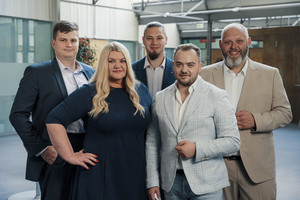
Meaningful inclusion in political and social dialogue continues to be a significant challenge. Those who pursue careers in politics may not fully recognise the perspectives or priorities of vocational education and training (VET) learners and apprentices. At the European level, apprentices need stronger representation, greater unity, improved mobility opportunities, and a shared sense of solidarity.
Actions on youth
How are apprentices represented in policymaking VET governance and how have you supported apprentices in joining national or regional policy discussions?
Youth councils are established within a wide range of companies and public-sector organisations across Germany. These councils provide young people with formal avenues to participate in organisational decision-making and to ensure their voices are heard on matters affecting their working environment.
Within DBB Youth, several dedicated working groups enable members to collaborate on specific topics. These groups offer a platform for apprentices and young professionals to share their perspectives and develop clear positions on issues of importance to them. Through this structure, members are empowered to actively contribute to policy dialogue and advocate for their interests within the organisation and the broader context of public service.
Our four working groups – Diversity, Modern Government, Security, and Europe – have developed several papers in recent years. These papers cover topics such as working in the civil service, the future of work in public administration, digitalisation, work-life balance, workplace safety, intergenerational fairness, volunteering, Europe, and children’s and youth rights. The full list of papers is available on our website.
We also run a political action week every year that gives young colleagues the opportunity to complete an internship with a member of the German parliament.
How does DBB Youth engage with employers, training providers, and government to improve the quality of apprenticeships?
We engage in political discussions with party officials as well as with members of the federal and local administration. Through this work, we ensure that apprentices who reach the required grade are transferred to an unlimited employment contract once their training is completed.
Because of our strong connections with members of parliament and other civic organisations, we are frequently invited to share our views on legislative matters, including the introduction of new laws or the revision of existing ones.
In addition to these direct interactions, we organise events that focus on specific and topical issues. These gatherings bring together subject matter experts for informed discussions. A notable example is our biennial ‘Campus of Ideas’. The 2026 edition will be centred around the theme ‘From Fatigue to Participation: Reviving Democracy’, encouraging dialogue on revitalising democratic engagement among young people and the wider community. edition will be centred around the theme ‘From Fatigue to Participation: Reviving Democracy’, encouraging dialogue on revitalising democratic engagement among young people and the wider community.
Looking ahead – advice for aspiring apprentices
What role should apprentices play in European initiatives like the Union of Skills or the Clean Industrial Deal?
Apprentices need to play an important role within the Union of Skills, helping to ensure that the economy stays aligned with the needs of the next generation of Europeans.
How can EAN better support your organisation in its work with apprentices locally or nationally?
We believe that EAN could further strengthen connections between different apprentice organisations across Europe. Creating a common ground and basic tools for comparing different systems will enable national systems to evolve and will support the development of a pan-European system.
What advice would you give to young people considering an apprenticeship today?
Young people considering an apprenticeship should consider mentoring, coaching or joining a Union. They should also reflect on the value of their training and try to make sure they are not expected to cover the costs themselves.
If you could deliver one message directly to the European Commission, on behalf of apprentices, what would it be?
Our most important message is the need to include the voices of apprentices. Apprentices and VET students bring direct experience to the table and should be actively involved in discussions. Instead of speaking about apprentices from a distance, they should be part of the discussions shaping their future.
DBB Youth is part of the EAN network, which works closely with the European Alliance for Apprenticeships. By highlighting diverse experiences across Europe, EAfA raises visibility and opens up new opportunities for members to collaborate.
 European Apprentices Network